
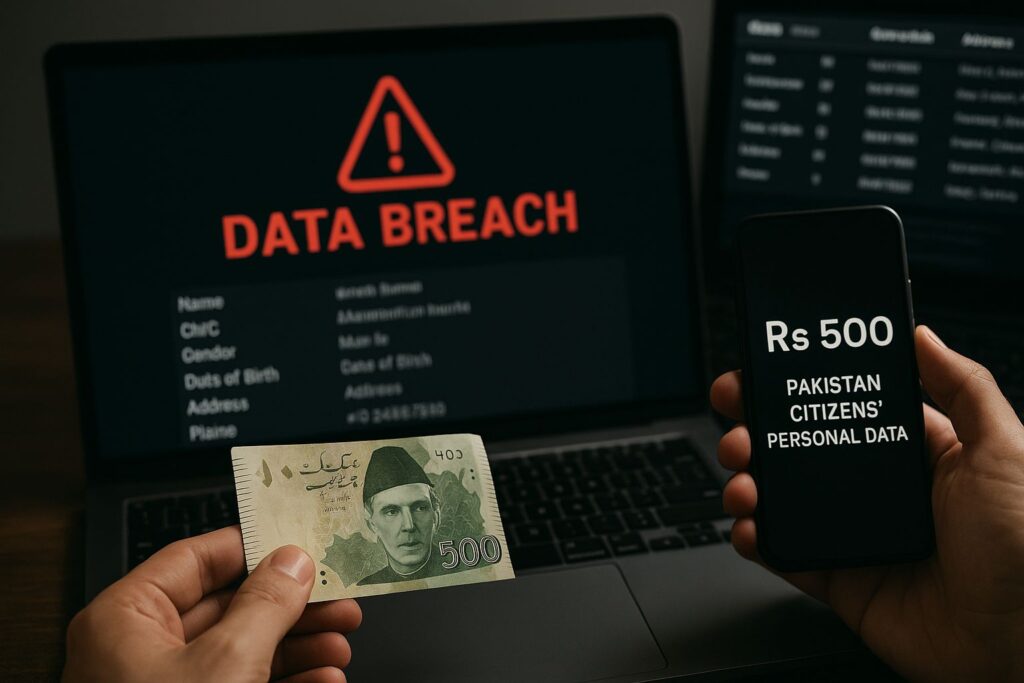
A shocking new report reveals that online traders are openly selling personal information of federal ministers, high-ranked officers, and common citizens in Pakistan—sometimes for as little as Rs 500.
Sensitive details such as mobile SIM ownership, CNIC copies, call history, and even international travel records are included in this dangerous trend, being marketed on dozens of websites and easily discovered through the search engine. The revelation has ignited a wave of public concern and motivated Swift government action.
What Data is Being Sold – and at What Cost?
Fresh investigation indicates that online platforms and WhatsApp groups are selling individual data. Buyers offer:
- SIM owner location data for about 500 rupees
- Full mobile call record for up to Rs 2,000
- International travel history for about 5,000 rupees
- Cnic copies and IMEI numbers of devices, sometimes for large amounts
This violation affects a broad spectrum, from citizens to federal ministers and regulators. The shocking thing is that workers warn that criminal elements can take advantage of this data for blackmail, scams, or physical surveillance.
The Government Responds to the Growing Alarm.
Internal Minister Mohsin Naqvi has ordered the National Cyber Crime Investigation Agency (NCCIA) to investigate the leak and ordered an immediate and intensive inquiry. A 14-member Special Task Force is now in charge of the inquiry, which is mandatory to identify those responsible and report conclusions within two weeks.
While PTA had previously claimed to shut down objectionable websites, frequent sales of sensitive data suggest systemic enforcement failures.
A Pattern of Data Violations in Pakistan
This crisis is no different.
Between 2019 and 2023, a Joint Investigation Team (JIT) found that 2.7 million Pakistanis were stolen from the database of Nadra in offices in Multan, Karachi, and Peshawar. Data reportedly ended in Dubai and was sold in foreign markets such as Argentina and Romania.
Furthermore, the previous court filing disclosed that individuals were marketing the data of 115 million Pakistanis on the dark web – although the case was ultimately rejected due to a lack of comprehensive data protection.
Results of Compromised Confidentiality
Easily available with personal data, citizens face real threats:
- Identity theft through fraudsters using CNIC details to open bank or mobile accounts in your name.
- Physical or online oppression occurs when the attacker obtains information or contact details.
- Corporate misuse, such as copying individuals for property fraud or bail manipulation.
Experts have warned that when Nadra, PTA, and data enforcement bodies, such as the faith, national security, and civic confidence.
Legal Gaps and the Road Ahead
Pakistan currently lacks a strong personal data security structure similar to the GDPR. While the draft of the Personal Data Protection Bill 2018 has been prepared, the legislative pipeline is pending.
Without clear legal safety measures, regulatory enforcement is behind the rapid development of digital hazards. Observers say that Pakistan is immediately needed:
- Effective data protection law
- Transparent enforcement by bodies like PTA and FIA
- Strong public awareness campaign on privacy risks
As things stand, leaked data reductions and online scams increase, which promotes both public anger and mistrust.
What Can Citizens Do to Protect Themselves?
- Limit sharing of CNIC, phone number, or travel data unless necessary.
- Be cautious with unwanted calls or WhatsApp messages – not all contacts are valid.
- Report suspicious activity to NCCIA or PTA when you suspect data abuse.
- Follow the update on how your data can be compromised and what steps the investigation will take.
Final Word: Minimum Cost, Maximum Risk
A disturbing truth about privacy under siege is revealed if personal data can be traded for the cost of digital lunch.
Bottom Line: Pakistan faces a data security emergency, where both government negligence and criminal enterprises threaten the privacy and security of its citizens.
A combination of urgency, legal reform, and public vigilance can determine this tide. Otherwise, the cost of personal privacy can be nothing, but still, serious consequences continue.